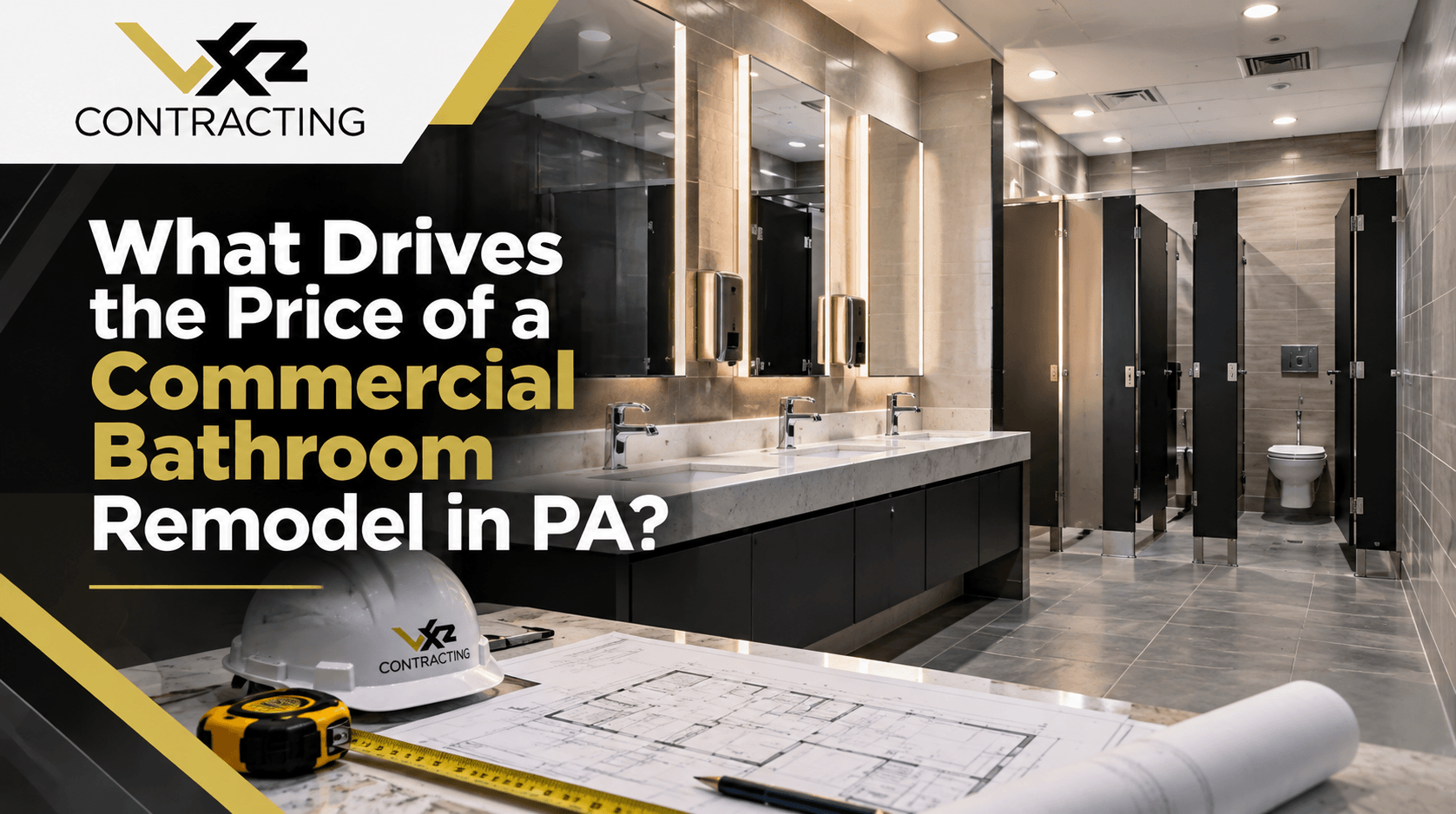
A restroom is often the one room every customer, guest, and employee uses, and it's the room they judge most harshly. A worn-out bathroom can undo the impression created by a beautiful lobby or dining room. Yet when business owners start collecting quotes for a commercial bathroom remodel, the numbers can vary widely from one project to the next, even for rooms that look similar on paper.
That variation isn't random. Commercial restrooms are built to stricter standards than residential bathrooms, they take far more abuse, and they usually have to stay usable while the rest of the business operates. Each of those realities shows up in the price. For hotels, restaurants, offices, and retail spaces in Hershey, PA, understanding these cost drivers makes it easier to set a realistic budget and compare bids fairly.
Here's a closer look at what actually determines the cost of a commercial bathroom remodel in Pennsylvania.
Quick Answer: The price of a commercial bathroom remodel in Pennsylvania is driven by six main factors: scope of work, number of fixtures, ADA accessibility requirements, commercial-grade fixtures and partitions, plumbing and ventilation changes, and hidden damage found during demolition. Keeping fixtures in their existing locations is one of the most effective ways to control cost.
How Is a Commercial Bathroom Remodel Different From a Residential One?
A residential bathroom remodel is mostly about style and comfort. A commercial restroom remodel has to meet accessibility law, building and plumbing codes, and the practical demands of heavy daily use. That changes almost every decision, from the layout to the fixtures to the wall finishes.
Scope is the first big variable. A cosmetic refresh, such as new paint, lighting, mirrors, and accessories, sits at the low end. Replacing fixtures and partitions while keeping the existing layout falls in the middle. A full gut remodel, where walls are opened, plumbing is moved, and the room is reconfigured, sits at the high end because it touches every trade.
The second variable is the number of fixtures. Commercial restrooms are typically priced per fixture as much as per square foot, because each toilet, urinal, and sink brings its own plumbing connections, carrier or support, partition section, and accessories. A six-fixture restroom costs much more than a single-user room, even when the square footage isn't dramatically different.
The third variable is the building itself. Older buildings often hide aging cast iron drain lines, undersized supply piping, or floors that aren't level. None of that is visible during a walk-through, but it all affects the final number once walls and floors are opened.
How Do ADA Requirements Affect Commercial Bathroom Remodel Costs?
Commercial restrooms open to the public generally must comply with the 2010 ADA Standards for Accessible Design, and Pennsylvania's Uniform Construction Code includes accessibility requirements as well. When you alter a restroom, the altered elements typically need to meet current accessibility standards, which can change the scope in ways owners don't expect.
Several accessibility items commonly add cost to a commercial bathroom remodel:
- Clear floor space: Wheelchair turning space and clearances at fixtures may require enlarging the room or reworking the layout.
- Accessible stalls: Larger stall footprints and outward-swinging or wider doors often mean reconfiguring partitions.
- Grab bars and backing: Grab bars must be mounted to solid backing inside the wall, which is installed during framing.
- Fixture heights: Toilets, lavatories, mirrors, and dispensers must sit within specific mounting heights and reach ranges.
- Lavatory knee clearance: Sinks need open space underneath, with insulated or protected pipes to prevent contact burns.
- Door hardware and approach: Lever handles, opening force limits, and maneuvering space at the door can affect the entry as well as the room.
How Do Fixtures, Partitions, and Finishes Affect the Price?
Commercial-grade materials cost more than residential products, but they're designed to survive thousands of uses per week. The choices you make in this category have a major effect on both the upfront price and how the room holds up over time.
Fixtures and Controls
Wall-hung toilets and sinks look clean and make floor cleaning easier, but they require in-wall carriers that add material and labor. Flushometer valves, sensor-operated faucets, and touch-free soap dispensers improve hygiene and reduce water waste, though they cost more than manual versions and may require electrical work or batteries.
Toilet Partitions
Partition material is one of the clearest price-versus-durability decisions. Powder-coated steel is typically the most economical option, solid plastic resists moisture and graffiti well, phenolic panels hold up in high-humidity settings, and stainless steel offers a premium, highly durable finish at a higher price.
Wall and Floor Finishes
Porcelain tile, epoxy flooring, and moisture-resistant wall panels are common in busy restrooms. Tile installed over cement board in wet zones costs more than painted drywall, but it stands up far better to splashing, harsh cleaners, and daily mopping.
How Do Plumbing and Hidden Damage Change the Budget?
Behind the finishes, the mechanical systems often drive the biggest surprises. Moving a toilet or sink even a few feet can mean cutting into a concrete slab, rerouting drain lines, and adjusting venting to stay compliant with the plumbing code. Keeping fixtures in their existing locations is one of the most effective ways to control costs.
Ventilation matters too. Commercial restrooms need adequate exhaust to control odors and moisture, and older exhaust fans or ductwork may not meet today's expectations. Upgrading exhaust can involve roof or wall penetrations and coordination with the building's HVAC system.
Hidden damage is the wild card. Long-term leaks around toilets and sinks can rot subfloors, rust old framing, and feed mold growth inside walls. A responsible contractor will build a contingency into the budget for conditions that can't be seen until demolition starts. Owners who plan for that contingency from day one avoid painful mid-project surprises.
What Should Hershey, PA Businesses Know About Restroom Remodels?
Hershey, PA has an economy built around hospitality and tourism, with hotels, restaurants, attractions, and event venues that see heavy seasonal traffic. For these businesses, restrooms take punishing use during peak months, and timing a remodel matters almost as much as the design.
Scheduling work during slower months can reduce disruption and lost revenue, and it can sometimes improve contractor availability for businesses in Hershey, PA. Hotels often renovate restrooms floor by floor or block by block so that most rooms stay available to guests, while restaurants may plan work around closed days or temporary portable facilities. These approaches protect revenue, but they can stretch the schedule and add mobilization costs, so they belong in the budget conversation early.
Older properties in and around Hershey, PA also bring their own considerations, including older plumbing, plaster walls, and layouts designed long before modern accessibility rules. When a business in Hershey, PA plans a restroom upgrade, getting an on-site assessment before finalizing a budget is the best way to account for these conditions and avoid change orders later.
Frequently Asked Questions
Do I need a permit for a commercial bathroom remodel in Pennsylvania?
Most commercial bathroom remodels that involve plumbing, electrical, or structural changes require permits under the Uniform Construction Code. Purely cosmetic work may not, but your contractor or local code office can confirm what applies to your project.
Is it cheaper to add a new restroom or remodel an existing one?
Remodeling an existing restroom is usually less expensive because water supply, drains, and venting are already in place. Adding a new restroom requires running new plumbing lines, which can be costly in buildings on concrete slabs.
How long do commercial restroom fixtures typically last?
Quality commercial fixtures like vitreous china toilets and sinks can last decades with proper maintenance. Moving parts such as flush valves, sensors, and faucet cartridges wear out sooner and are usually serviced or replaced separately.
Can I convert multi-stall restrooms into single-user restrooms?
Many businesses convert multi-stall restrooms into single-user, all-gender rooms for privacy and flexibility. The conversion must still meet plumbing fixture counts and accessibility requirements, so it should be reviewed during design.
Should I replace bathroom lighting during a remodel?
Updating to LED fixtures during a remodel is usually cost-effective because the ceiling is already open. LED lighting lowers energy use, reduces maintenance, and can be paired with occupancy sensors to turn off when the room is empty.
Conclusion
The price of a commercial bathroom remodel in Pennsylvania comes down to scope, fixture count, accessibility requirements, material durability, plumbing and ventilation work, and the hidden conditions inside older buildings. Timing and phasing also matter, especially for hospitality businesses that can't afford to close restrooms during busy seasons. Planning for each of these factors up front leads to a more accurate budget and a smoother project.
Vx2 Contracting remodels commercial bathrooms for hotels, restaurants, offices, and retail spaces throughout South Central Pennsylvania. If your restrooms are due for an upgrade, contact our team to schedule an assessment and get a clear, detailed estimate for your project.