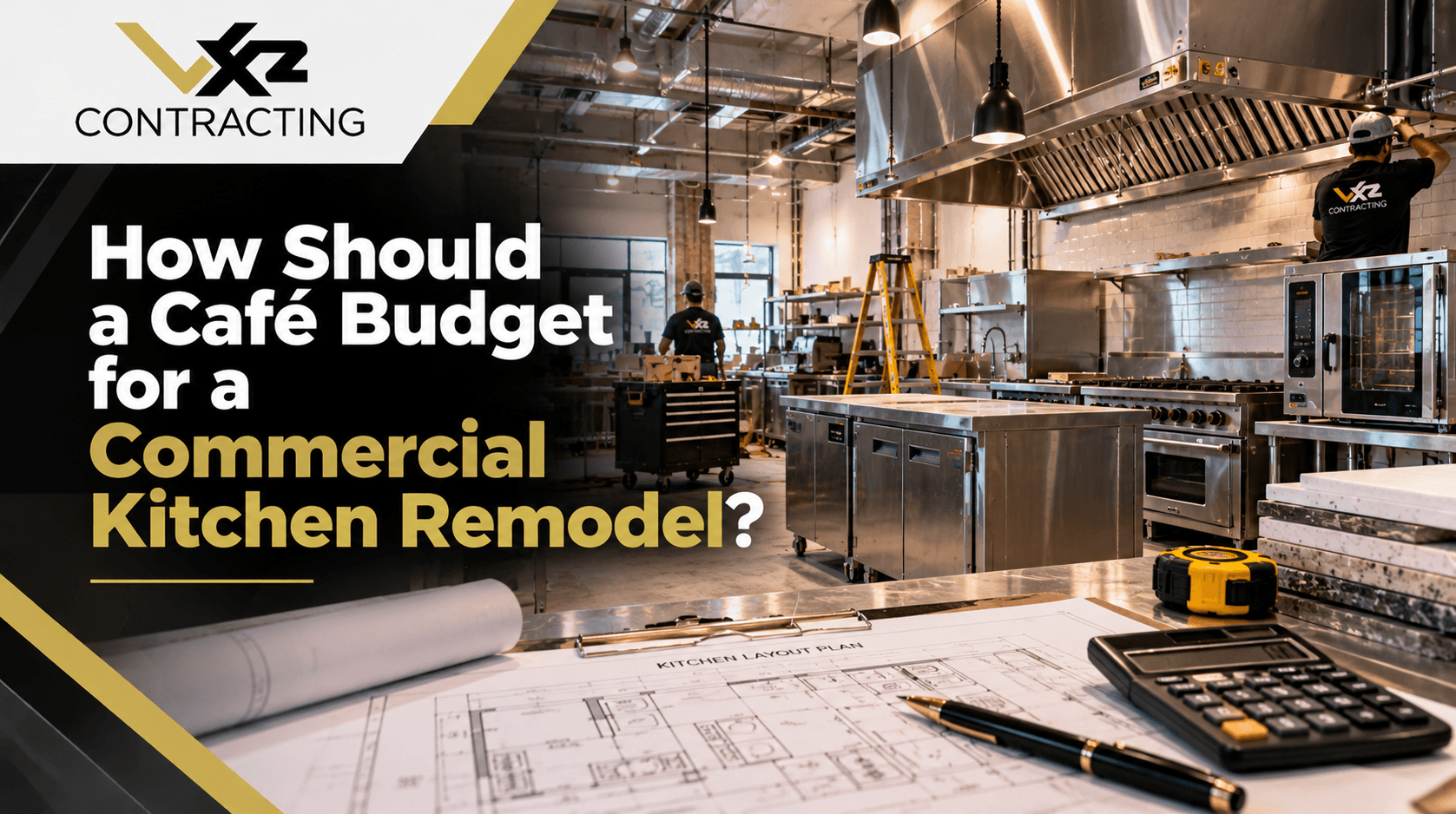
Every café owner knows the moment. The espresso machine is fighting for counter space, the reach-in cooler is running nonstop, and the prep area works only because your staff has memorized an awkward choreography. A kitchen remodel promises faster service, happier employees, and room to grow the menu. Then the first quote arrives, and it looks nothing like the number you had in your head.
The gap usually isn't because contractors are inflating prices. It's because commercial kitchens involve far more than cabinets and countertops. Health codes, ventilation, plumbing, electrical capacity, and specialized equipment all shape the final cost. Café owners in Lititz, PA, and throughout South Central Pennsylvania, are much better positioned when they build a budget around those realities instead of a guess.
This guide walks through how to structure a café kitchen remodel budget, where the money typically goes, and how to avoid the surprises that derail small food businesses.
Quick Answer: A café should budget for a commercial kitchen remodel by starting with its menu and equipment list, then pricing the construction that equipment requires: plumbing, electrical, ventilation, fire suppression, and code-compliant finishes. Add soft costs for design, permits, and health department review, plus a contingency of roughly 10 to 20 percent.
How Do You Build a Realistic Café Kitchen Remodel Budget?
A good budget starts with clarity about what the kitchen needs to do, not what it should look like. A café that serves drip coffee and pastries has very different requirements than one that grills sandwiches, bakes in-house, or plans to add a full breakfast menu. The menu determines the equipment, the equipment determines the utilities, and the utilities often determine the biggest construction costs.
Following a clear sequence helps you build a budget that holds up once bids come in:
- Define the menu and volume. List what you'll prepare now and what you hope to add within a few years, along with your expected peak-hour volume.
- Build an equipment list. Identify each piece of equipment, its size, and its power, gas, water, and drain needs.
- Map the workflow. Sketch how ingredients move from receiving to storage, prep, cooking, and service, so the layout supports speed and food safety.
- Get a site assessment. Have a contractor review existing plumbing, electrical service, ventilation, and floor conditions before pricing.
- Separate equipment and construction costs. Track them as distinct budget categories so you can compare bids accurately.
- Add soft costs. Include design, permits, health department plan review, and inspection fees.
- Set a contingency. Reserve a portion of the budget, often around 10 to 20 percent, for unexpected conditions and changes.
Where Does the Money Go in a Café Kitchen Remodel?
Café owners often underestimate how much of the budget goes into the building itself rather than the equipment. A new oven may have a clear price tag, but installing it can require a ventilation hood, fire suppression, gas piping, and electrical upgrades that cost more than the oven.
Construction costs in a café kitchen usually fall into a few major categories:
- Plumbing: Hand sinks, three-compartment sinks, prep sinks, floor drains, and grease management all require supply and drain work.
- Electrical: Commercial equipment can exceed the capacity of an older electrical service, requiring new circuits or a panel upgrade.
- Ventilation: Cooking equipment that produces grease-laden vapors generally needs a commercial hood, exhaust fan, and makeup air.
- Fire protection: Hoods over grease-producing equipment typically require a fire suppression system.
- Surfaces and finishes: Health codes require smooth, durable, cleanable surfaces on floors, walls, and ceilings in food prep areas.
- Framing and drywall: Walls may need to be moved, reinforced for equipment, or rebuilt with moisture-resistant materials.
Which Health Code Requirements Affect a Café Kitchen Budget?
Food service kitchens are among the most heavily regulated spaces in commercial construction. In Pennsylvania, retail food facilities are licensed and inspected either by the Pennsylvania Department of Agriculture or by a local health department, depending on the municipality. Many jurisdictions require plan review before construction begins on a new or significantly remodeled food facility.
Requirements typically cover the number and placement of hand sinks, separation between raw and ready-to-eat food areas, approved surface materials, adequate lighting, and proper storage. Grease management is another major item. Depending on your menu and local wastewater rules, you may need a grease trap or larger grease interceptor, which can add meaningful cost if it requires excavation or significant plumbing changes.
Building a remodel around these requirements from the start is far cheaper than redoing work after a failed inspection. An experienced contractor will coordinate with your designer and the reviewing agency so that the kitchen meets code before the walls are closed.
What Hidden Costs Can Affect a Café Kitchen Remodel?
Even well-planned budgets can be thrown off by what's behind the walls and under the floor. Older buildings may have outdated wiring, corroded drain lines, or subfloors damaged by years of spills and mopping. These issues often surface only during demolition.
Time is another hidden cost. Every day your café is closed for construction is a day without sales, and your fixed costs, such as rent, loan payments, and insurance, keep running. Some owners phase the work or schedule it during slower seasons to protect revenue. Others plan a short, intensive closure with everything ordered and staged in advance so crews can move quickly.
Equipment lead times can also delay a project. Custom hoods, specialty espresso systems, and refrigeration units may take weeks to arrive. Ordering early and confirming delivery dates before demolition begins helps prevent your kitchen from sitting half-finished while you wait on a single piece of equipment.
What Should Lititz, PA Café Owners Plan For?
Lititz, PA is known for its walkable downtown, independent shops, and busy food scene, which draws both locals and visitors from across Lancaster County. Many cafés operate in older buildings with character, from historic storefronts to converted homes. That charm comes with practical construction considerations.
Older buildings in Lititz, PA may have limited electrical service, older plumbing, uneven floors, and tight back-of-house spaces that make equipment placement difficult. Running a new exhaust duct from a hood to the roof or an exterior wall can be challenging in multi-story or attached buildings. Some properties may also have historic or design guidelines that affect exterior changes, such as where an exhaust fan or vent can be located.
Seasonal traffic is another factor for downtown businesses. Café owners in Lititz, PA often plan around busy weekends, festivals, and holiday shopping periods, and scheduling construction during a quieter stretch can reduce lost revenue. An on-site assessment before finalizing the budget is the best way for a Lititz, PA café to account for these building-specific factors.
Frequently Asked Questions
Should a café lease or buy kitchen equipment?
Leasing reduces upfront costs and can include maintenance, but you'll typically pay more over the life of the lease. Buying costs more initially but gives you ownership and may offer tax advantages, so it's worth discussing with your accountant.
Is used commercial kitchen equipment a good way to save money?
Used equipment can lower costs significantly, especially for stainless steel tables, shelving, and sinks. Refrigeration and cooking equipment carry more risk, so check its condition, age, warranty status, and whether it meets current certification standards.
Can a landlord help pay for a café kitchen remodel?
Many commercial leases include a tenant improvement allowance that helps cover build-out costs. The amount and terms are negotiated in the lease, so it's worth raising before you sign or renew.
How much space should a café kitchen need?
Space needs depend on your menu, volume, and service style rather than a fixed ratio. A simple coffee-and-pastry café can operate in a compact area, while scratch cooking and baking require more prep and storage room.
Is energy-efficient equipment worth it for a small café?
ENERGY STAR certified commercial food service equipment, such as refrigerators, ice machines, and dishwashers, typically uses less energy and water than standard models. The higher purchase price is often recovered through lower utility bills, and some utilities offer rebates on qualifying equipment.
Conclusion
A café kitchen remodel budget should start with your menu and equipment, then account for plumbing, electrical, ventilation, fire protection, finishes, and health code requirements. Setting aside money for permits, plan review, and hidden conditions, along with planning around closures and equipment lead times, keeps the project on track and protects your cash flow.
Vx2 Contracting helps food service businesses throughout South Central Pennsylvania plan and build commercial kitchens that are efficient, durable, and code compliant. If you're planning a café kitchen remodel, reach out to schedule a site visit and get a clear, detailed estimate for your project.