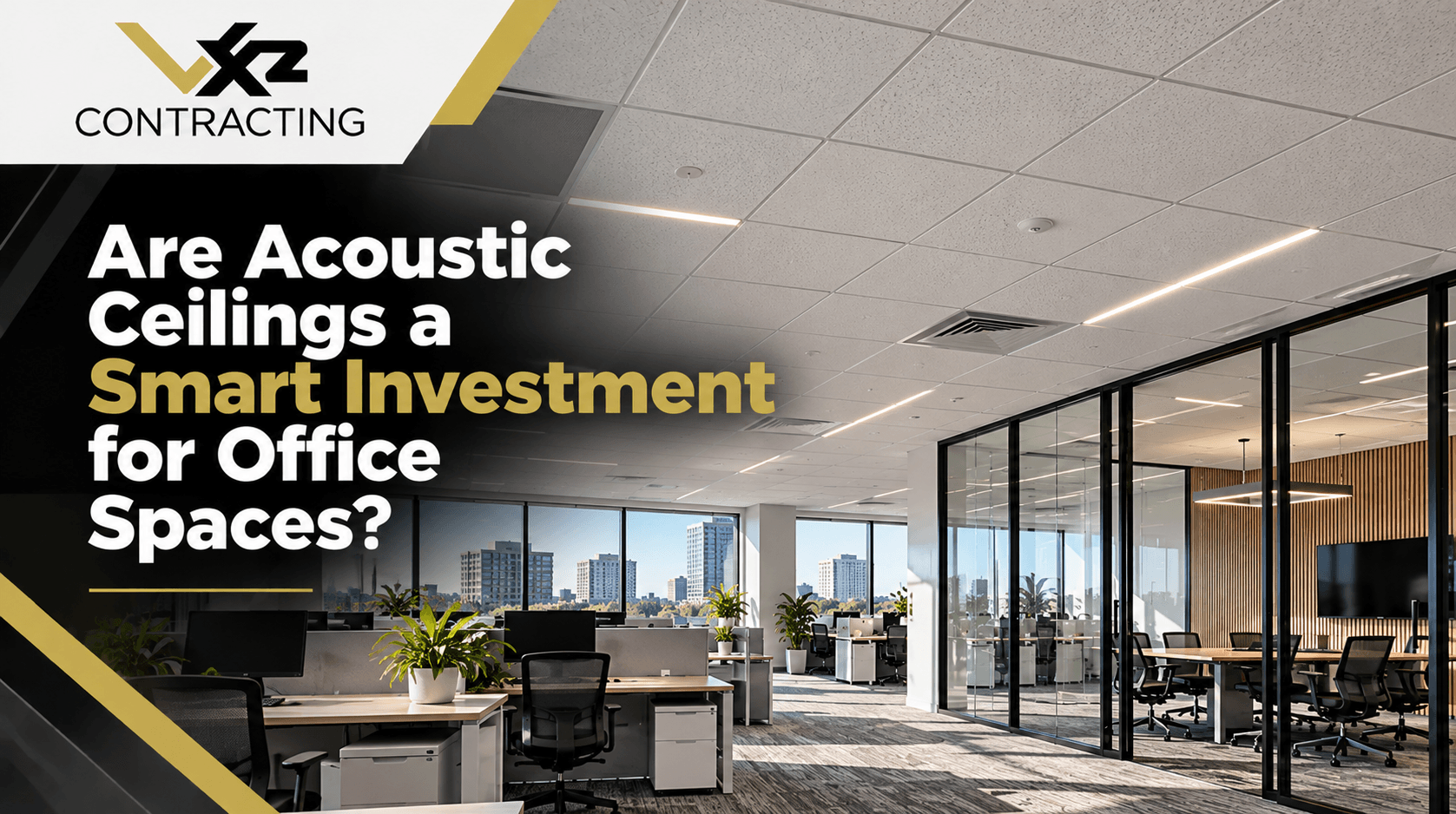
Open floor plans were supposed to spark collaboration. In many offices, they mostly spread noise. Phone calls carry across the room, conversations bounce off hard surfaces, and employees end up wearing headphones just to concentrate. Meeting rooms leak confidential discussions into hallways, and video calls pick up every echo.
The ceiling is often the biggest untreated surface in an office, and it's a major reason sound behaves so badly. Acoustic ceilings are designed to fix that, but they're also an investment, and business owners reasonably want to know whether the improvement justifies the cost. For offices in Mechanicsburg, PA, and across South Central Pennsylvania, the answer depends on how the space is used, how bad the noise problem is, and which system is chosen.
Here's how to evaluate acoustic ceilings as an investment rather than just another line item.
Quick Answer: Yes, for most offices. Acoustic ceilings reduce echo and background noise, keep conversations private between rooms, improve video calls, and refresh the look of the space. The best value comes from matching panels to each area: high-NRC panels for open workspaces and high-CAC panels for private offices and conference rooms.
How Do Acoustic Ceilings Improve Office Sound?
An acoustic ceiling is any ceiling system designed to manage sound, most commonly a suspended grid holding sound-absorbing panels. These panels are typically made from mineral fiber, fiberglass, or other porous materials that absorb sound energy instead of reflecting it back into the room.
Two performance ratings help explain what a ceiling can do. The Noise Reduction Coefficient, or NRC, measures how much sound a material absorbs, on a scale from 0 to 1. A higher NRC means less echo and lower background noise inside the room. The Ceiling Attenuation Class, or CAC, measures how well a ceiling blocks sound from traveling through the ceiling space into neighboring rooms. A higher CAC means better privacy between adjacent offices.
Those two ratings serve different goals. An open workspace needs high absorption to calm the overall noise level, so NRC matters most. Private offices, conference rooms, and HR spaces need sound to stay inside the room, so CAC becomes more important. Some panels balance both, while others excel at one.
Understanding which problem you're solving is the first step toward spending wisely. A ceiling that's perfect for an open-plan call center may be the wrong choice for a row of executive offices.
What Affects the Cost of an Office Acoustic Ceiling?
The price of an acoustic ceiling depends heavily on the condition of the existing space and the performance level you're targeting. Replacing worn tiles in a sound grid is a very different project than installing a new suspended system in an open-structure ceiling.
The major cost factors in an office acoustic ceiling project include the following:
- Panel type and performance: Basic mineral fiber tiles are economical, while high-NRC, high-CAC, or designer panels cost more.
- Grid system: Reusing an existing grid saves money, while new grids, specialty profiles, or concealed systems add cost.
- Ceiling height and access: Tall ceilings and spaces filled with furniture or equipment take more time to work in.
- Integration with other systems: Lights, sprinkler heads, diffusers, and sensors all have to be cut in and coordinated.
- Demolition and disposal: Removing an old ceiling and hauling away debris adds labor and disposal fees.
- Occupied-space work: After-hours installation or phased work in a busy office increases labor costs.
What Return Do Acoustic Ceilings Deliver for Businesses?
Acoustic ceilings don't produce revenue directly, so their value shows up in other ways. The most significant is employee focus. Noise and distraction are among the most common complaints about office environments, and an office that's easier to work in supports concentration, reduces fatigue, and makes long workdays more comfortable.
Speech privacy is another return. Professional service firms, healthcare offices, financial advisors, and HR departments handle sensitive conversations every day. When those conversations carry into hallways or neighboring offices, client trust and confidentiality are at risk. A ceiling with strong attenuation helps keep private discussions private.
Meeting quality matters more than ever with hybrid work. Rooms with hard, reflective surfaces create echo that makes video calls harder to follow on both ends. Better absorption improves speech clarity, which helps meetings run more smoothly.
Finally, acoustic ceilings contribute to the look of the space. New panels can brighten an office, hide aging infrastructure, and make the space more appealing to employees, clients, and future tenants. For building owners, an updated ceiling can be part of what helps a suite lease faster.
Which Acoustic Ceiling System Is Right for Your Office?
There's no single best ceiling for every office. The right choice balances acoustic performance, appearance, durability, and budget, and it should match how each area of the office is used.
The most common acoustic ceiling options compare as follows:
| System | Acoustic Strength | Relative Cost | Best Suited For |
|---|---|---|---|
| Standard mineral fiber tiles | Moderate absorption and attenuation | Low | General offices, corridors, budget-focused projects |
| High-NRC fiberglass panels | Excellent absorption | Moderate | Open workspaces, call centers, collaboration areas |
| High-CAC mineral fiber panels | Strong attenuation | Moderate | Private offices, conference rooms, HR and medical spaces |
| Acoustic clouds and baffles | Targeted absorption | Moderate to high | Open-structure ceilings, lobbies, modern office designs |
| Wood or metal specialty panels | Varies by perforation and backing | High | Executive suites, reception areas, high-end finishes |
What Should Mechanicsburg, PA Offices Consider Before Upgrading?
Mechanicsburg, PA has a mix of office environments, from professional offices and medical practices to corporate and logistics-related offices in business parks along the region's major highways. Many of these buildings were constructed with basic ceiling systems that met code but weren't designed with modern work habits in mind.
Older suites in Mechanicsburg, PA often have discolored or sagging tiles, outdated grids, and lighting layouts that no longer fit the floor plan. In these cases, an acoustic upgrade can be combined with lighting improvements and layout changes, making the most of a single construction window. Newer buildings with open-structure ceilings may benefit from acoustic clouds or baffles that improve sound while preserving the industrial look.
Businesses in Mechanicsburg, PA that lease their space should also talk with their landlord before starting work, since ceilings are often part of the base building and changes may need approval. A site visit is the best way for an office in Mechanicsburg, PA to identify the most cost-effective path, whether that's replacing panels in an existing grid or installing an entirely new system.
Frequently Asked Questions
Can acoustic panels be added to an existing drywall ceiling?
Yes. Acoustic panels can be mounted directly to a drywall ceiling, or a suspended grid can be installed below it if there's enough height. Direct-mount panels are a good option when ceiling height is limited.
Do acoustic ceilings have fire ratings?
Many ceiling panels carry fire performance classifications, and some are part of fire-rated ceiling assemblies. If your space requires a rated ceiling, the panels and grid must match the tested assembly.
How do you clean acoustic ceiling tiles?
Most tiles can be lightly vacuumed with a soft brush attachment to remove dust. Some panels are washable or scrubbable, which is useful in kitchens, healthcare spaces, and other areas that need frequent cleaning.
How long do acoustic ceiling tiles last?
Acoustic tiles can last many years when kept dry and undamaged. Tiles that become stained, sagged, or damaged by water should be replaced, and keeping a supply of matching spare tiles makes repairs easier.
Can acoustic ceilings help with energy efficiency?
Some ceiling panels have high light reflectance, which helps spread light across the room and can reduce the amount of artificial lighting needed. Ceiling systems can also work with insulation to improve thermal comfort in certain buildings.
Conclusion
Acoustic ceilings are a smart investment for most offices because they reduce noise, protect speech privacy, improve meetings, and refresh the look of the space. The cost depends on the panel type, grid condition, building access, and integration with other systems. Choosing the right panels for each area, based on NRC and CAC ratings, ensures you pay for performance where it matters most.
Vx2 Contracting installs acoustic ceiling systems in offices, retail spaces, and commercial buildings throughout South Central Pennsylvania. If noise is affecting your workplace, contact our team to discuss your space and get a detailed estimate for an acoustic ceiling upgrade.